









| M26: General | |||
| Date of first acceptance | November 1944 | Total acceptances | 2,202 |
| Manufacturers |
|
Crew |
|
| M26: Dimensions | |||
| Combat weight | 92,355lbs 41,892kg |
Height over cupola top | 109.4" 277.9cm |
| Length without gun, with sandshields and pintle | 249.1" 632.7cm |
Gun overhang forward | 91.4" 232cm |
| Width over sandshields | 138.3" 351.3cm |
Tread | 110" 279cm |
| Ground clearance | 17.2" 43.7cm |
Fire height | 78" 200cm |
| Turret ring diameter | 69" 175cm |
Ground pressure, zero penetration | 12.5psi .878kg/cm² |
| M26: Armament | |||||
| Type | Mount | Ammunition | Traverse | Max traverse rate | Elevation |
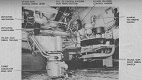
| 90mm Gun M3 | M67 in turret | 70 rounds (10 ready) |
360° (manual and hydraulic) |
24°/sec | +20° to -10° (manual) |
| .50cal M2HB MG | Flexible in turret AA mount | 550 rounds | 360° (manual) |
-- | Manual |
| .30cal M1919A4 MG | Coaxial to 90mm gun | 5,000 rounds | 360° (manual and hydraulic) |
24°/sec | +20° to -10° (manual) |
| .30cal M1919A4 MG | Ball mount 7722408 in right bow | Manual | -- | Manual | |
| Aiming equipment | |||||
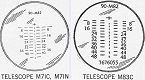
| Periscope M10F or M4A1 with telescope M77F or M77H; telescope M83C, M71N, or M71C for gunner | |||||
| M26: Armor | ||
| Assembly | ||
| Welding | ||
| Hull | ||
| Rolled and cast homogeneous steel | ||
| Location | Thickness | Angle from vertical |
| Upper front | 4.0" 10cm |
46° |
| Lower front | 3.0" 7.6cm |
53° |
| Front sides | 3.0" 7.6cm |
0° |
| Rear sides | 2.0" 5.1cm |
0° |
| Upper rear | 2.0" 5.1cm |
10° |
| Lower rear | .75" 1.9cm |
62° |
| Top | .875" 2.22cm |
90° |
| Front floor | 1.0" 2.5cm |
90° |
| Rear floor | .5" 1.3cm |
90° |
| Turret | ||
| Cast homogeneous steel | ||
| Location | Thickness | Angle from vertical |
| Gun shield | 4.5" 11cm |
0° |
| Front | 4.0" 10cm |
0° |
| Sides | 3.0" 7.6cm |
0° to 8° |
| Rear | 3.0" 7.6cm |
0° to 5° |
| Top | 1.0" 2.5cm |
90° |
| M26: Automotive | |||||
| Engine | Ford GAF; 8 cylinder, 4 cycle, 60º vee gasoline | ||||
| Horsepower | Net: 450@2,600rpm Gross: 500@2,600rpm |
Torque | Net: 950 ft-lb@2,200rpm Gross: 1,040 ft-lb@2,200rpm |
Fuel capacity | 183gal 693L |
| Transmission | Torqmatic, 3 speeds forward, 1 reverse | ||||
| Steering | Controlled differential, steering levers | ||||
| Brakes | Mechanical, 3 shoe, reverse anchor | ||||
| M26: Suspension | ||
| Type | Road wheels | Track return rollers |
| Torsion bar | 6 individually sprung dual/track | 5 dual/track |
| Drive sprockets | Idlers | Shock absorbers | 13-tooth rear drive | Dual compensating at front of track | On first 2 and last 2 road wheels/track |
| M26: Track | |||||||
| T80E1 | |||||||
| Center guide, double pin, rubber and steel | |||||||
| Width | 23" 58cm |
Pitch | 6" 15cm |
Shoes/track | 82 | Ground contact length | Left side: 151.5" Right side: 155.5" Left side: 384.8cm Right side: 395.0cm |
| T81 | |||||||
| Center guide, single pin, steel | |||||||
| Width | 24" 61cm |
Pitch | 6" 15cm |
Shoes/track | 82 | Ground contact length | Left side: 151.5" Right side: 155.5" Left side: 384.8cm Right side: 395.0cm |
| M26: Performance | |||
| Max level road speed | 25mph sustained 30mph dash 40kph sustained 48kph dash |
Max trench | 96" 240cm |
| Max grade | 60% | Max vertical obstacle | 46" 120cm |
| Min turning diameter | 60' 18m |
Max fording depth | 48" 120cm |
| Cruising range | ~100mi, roads ~160km, roads |
||
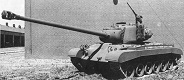
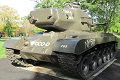
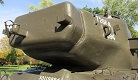
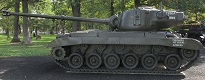
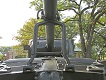
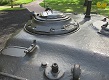
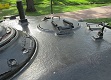
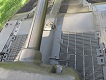
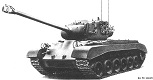
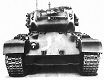
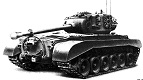
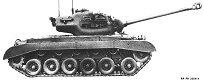
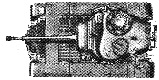
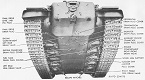
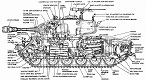
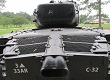
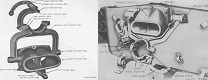
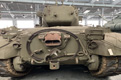
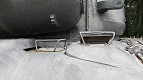
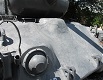
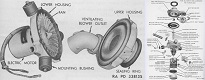
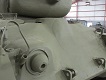
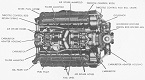
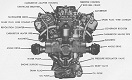
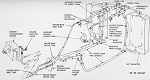
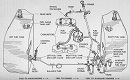
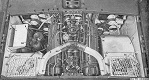
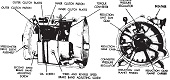
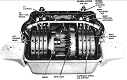
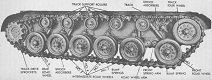
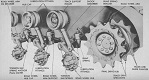
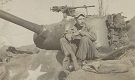
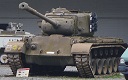
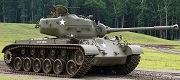
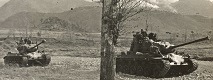
The M26 Pershing was the culmination of the T20 series of test vehicles. The T26 series was reclassed from medium to heavy tanks on June 29, 1944, but renamed as medium tanks in May 1946. Although not standardized until March 1945, Pershings had been sent to the European Theater of Operations as T26E3s with the Zebra Mission in January 1945 (along with equipment including pilot models of the 155mm GMC M40 and 8" HMC M43). M26 was armed with the same 90mm gun as the M36 tank destroyer, and the GAF engine in the M26 was essentially the GAA of the medium tank M4A3 redesigned to present a lower height, even though M26 weighed almost 26,000lbs (12,000kg) more than M4A3. This produced a relatively underpowered tank. The drive sprocket of the M26 was mounted below the level of the track's upper run, and the engine exhaust escaped through an opening in the hull rear plate. A bulge in the hull glacis between the drivers housed an exhaust blower. Early-production tanks were fitted with a 400cfm (11m³/min) ventilator between the drivers. This was replaced by a 1,000cfm (28m³/min) ventilator, which necessitated a new upper front hull casting. The armor in front of this ventilator was also thickened, and the set of drivers' periscopes in the hull armor was eventually omitted.
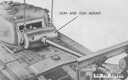
In 1948, the first improved M26A1s were accepted. These tanks were armed with the 90mm gun M3A1 in the combination gun mount M67A1. The M3A1 was fitted with a bore evacuator and a lighter, single-baffle muzzle brake. The M67A1 mount had a lighter equilibrator spring since the M3A1's lighter muzzle brake imparted less torque upon firing. M26A1 also had a modified gun travel lock, and some vehicles had a gun elevation stabilizer installed.
| T26E4: General | |||
| Date of first acceptance | 1945 | Total acceptances | 25 |
| Manufacturer | Fisher Tank Arsenal | Crew |
|
| T26E4: Dimensions | |||
| Combat weight | 96,000lbs 43,500kg |
Height over cupola top | 109.4" 277.9cm |
| Length without gun, with sandshields and pintle | 249.1" 632.7cm |
Gun overhang forward | 157" 399cm |
| Width over sandshields | 138.3" 351.3cm |
Tread | 110" 279cm |
| Ground clearance | 17.2" 43.7cm |
Fire height | 78" 200cm |
| Turret ring diameter | 69" 175cm |
Ground pressure, zero penetration | 13.0psi .913kg/cm² |
| T26E4: Armament | |||||
| Type | Mount | Ammunition | Traverse | Max traverse rate | Elevation |
| 90mm Gun T15E2 | T119 in turret | 54 rounds | 360° (manual and hydraulic) |
24°/sec | +20° to -10° (manual) |
| .50cal M2HB MG | Flexible in turret AA mount | 440 rounds | 360° (manual) |
-- | Manual |
| .30cal M1919A4 MG | Coaxial to 90mm gun | 5,000 rounds | 360° (manual and hydraulic) |
24°/sec | +20° to -10° (manual) |
| .30cal M1919A4 MG | Ball mount 7722408 in right bow | Manual | -- | Manual | |
| Aiming equipment | |||||
| Periscope M10E4; telescope M71E4 for gunner | |||||
| T26E4: Armor | ||
| Assembly | ||
| Welding | ||
| Hull | ||
| Rolled and cast homogeneous steel | ||
| Location | Thickness | Angle from vertical |
| Upper front | 4.0" 10cm |
46° |
| Lower front | 3.0" 7.6cm |
53° |
| Front sides | 3.0" 7.6cm |
0° |
| Rear sides | 2.0" 5.1cm |
0° |
| Upper rear | 2.0" 5.1cm |
10° |
| Lower rear | .75" 1.9cm |
62° |
| Top | .875" 2.22cm |
90° |
| Front floor | 1.0" 2.5cm |
90° |
| Rear floor | .5" 1.3cm |
90° |
| Turret | ||
| Cast homogeneous steel | ||
| Location | Thickness | Angle from vertical |
| Gun shield | 4.5" 11cm |
0° |
| Front | 4.0" 10cm |
0° |
| Sides | 3.0" 7.6cm |
0° to 8° |
| Rear | 3.0" (not including counterweight) 7.6cm (not including counterweight) |
0° to 5° |
| Top | 1.0" 2.5cm |
90° |
| T26E4: Automotive | |||||
| Engine | Ford GAF; 8 cylinder, 4 cycle, 60º vee gasoline | ||||
| Horsepower | Net: 450@2,600rpm Gross: 500@2,600rpm |
Torque | Net: 950 ft-lb@2,200rpm Gross: 1,040 ft-lb@2,200rpm |
Fuel capacity | 183gal 693L |
| Transmission | Torqmatic, 3 speeds forward, 1 reverse | ||||
| Steering | Controlled differential, steering levers | ||||
| Brakes | Mechanical, 3 shoe, reverse anchor | ||||
| T26E4: Suspension | ||
| Type | Road wheels | Track return rollers |
| Torsion bar | 6 individually sprung dual/track | 5 dual/track |
| Drive sprockets | Idlers | Shock absorbers | 13-tooth rear drive | Dual compensating at front of track | On first 2 and last 2 road wheels/track |
| T26E4: Track | |||||||
| T80E1 | |||||||
| Center guide, double pin, rubber and steel | |||||||
| Width | 23" 58cm |
Pitch | 6" 15cm |
Shoes/track | 82 | Ground contact length | Left side: 151.5" Right side: 155.5" Left side: 384.8cm Right side: 395.0cm |
| T81 | |||||||
| Center guide, single pin, steel | |||||||
| Width | 24" 61cm |
Pitch | 6" 15cm |
Shoes/track | 82 | Ground contact length | Left side: 151.5" Right side: 155.5" Left side: 384.8cm Right side: 395.0cm |
| T26E4: Performance | |||
| Max level road speed | 20mph sustained 25mph dash 32kph sustained 40kph dash |
Max trench | 96" 240cm |
| Max grade | 60% | Max vertical obstacle | 46" 120cm |
| Min turning diameter | 60' 18m |
Max fording depth | 48" 120cm |
| Cruising range | ~100mi, roads ~160km, roads |
||
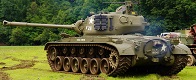
The T26E4 resulted from the desire to mount the powerful new 90mm gun T15E1 into a tank in order to take on heavier German vehicles such as the Pz.Kpfw.Panther or Pz.Kpfw.Tiger Ausf.B. Due to handling and stowage difficulties when mounted on a tank, the gun was redesigned into the T15E2 in order to use separate-loading ammunition. A large counterweight was added to the turret bustle to make up for the new ordnance, which was 970lb (440kg) heavier and twenty calibers longer than the M3. The elevation mechanism and turret and travel locks were strengthened to deal with the T15E2. One thousand T26E4s were authorized in March 1945, and these were intended to replace a thousand M26s on the production line. The end of World War II saw the production run capped at 25, due in part to the development of more powerful and manageable unitary ammunition.
The first pilot T26E4, made from the first T26E1 pilot, arrived in Europe on 15 March 1945. This tank was armed with the 90mm gun T15E1 using one-piece ammunition, and the equilibrator springs were external to the turret as opposed to production T26E4s, which used hydropneumatic equilibrators inside the turret. Applique armor was added to this tank in-theater, and the vehicle took part in a small number of engagements.